

Getting a medical claim denied can really hit hard. You go through everything carefully, fill out the forms, keep your records in place, and still end up facing an insurance claim denial. It feels frustrating, no doubt about that. But it does not mean you are out of options. If you understand how to appeal a denied medical claim, you can still turn things around and recover what you are owed. Let’s walk through it in a simple way so the process in 2026 feels easier to handle.
Why Claims Get Denied (And Why It Matters)
Let’s slow down for a second. Before reacting, look at the reason behind it. Sometimes it’s obvious. A missing document. A wrong code. Other times, not so clear. You read it once and think, “Wait, what does that even mean?” That’s normal.
Most denials come from simple claim rejection reasons. Small gaps. Tiny errors. Things that don’t feel big but are, at least to insurers. And honestly? This is where people rush. They try to fix everything at once. That rarely works.
Instead, focus on what actually caused the issue. Pull out your records. Medical bills. Notes. Your explanation of benefits. Even if it seems disorganized at first, lay them out. The medical claim appeal process feels less chaotic and more manageable after that one stage.
Steps to Challenge Your Denied Claim
Alright, now comes the part where things start moving.
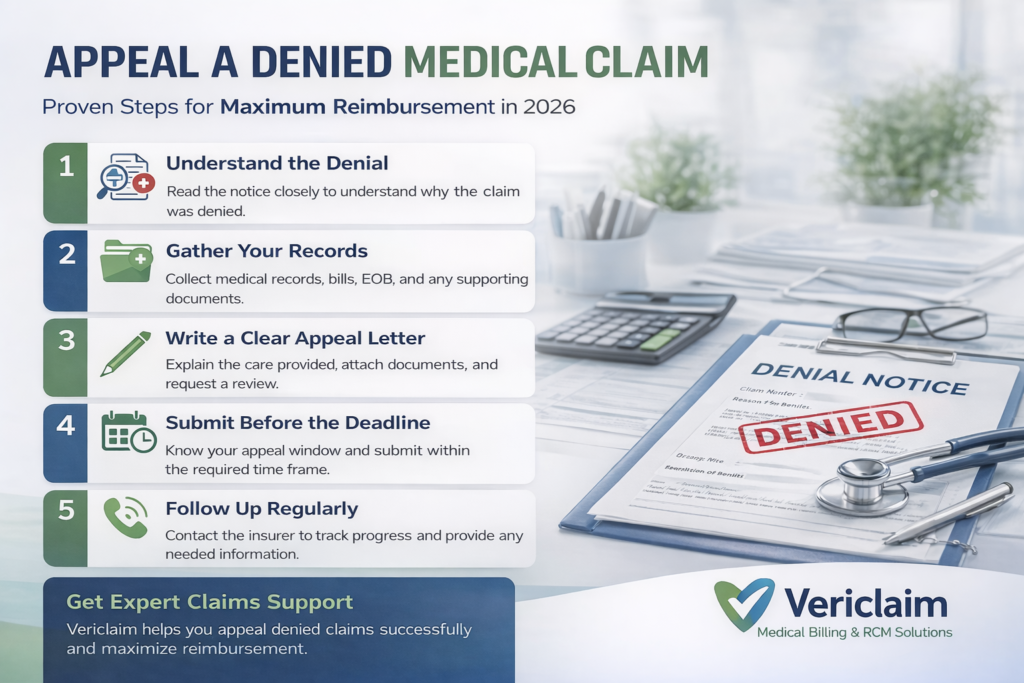
- Read the denial notice again: Yes, again. There’s almost always something you missed the first time.
- Gather your documents: Don’t overthink this part. If it connects to your treatment, include it. Better too much than too little.
- Write your appeal letter clearly: Keep it simple. No need to sound overly formal. Just explain what happened, why it should be covered, and support it.
- Don’t miss deadlines: It’s easy to delay. But waiting too long can cost you the chance to appeal.
- Follow up regularly: A quick call can sometimes move things faster than waiting quietly.
These are not difficult strategies. Just successful appeal strategies that work when you actually stick to them.
How to Maximize Medical Reimbursement
Now let’s talk about the part everyone cares about, getting paid properly.
Because fixing a denial is one thing. But to maximize medical reimbursement, you need to go a bit deeper.
- Check your billing codes carefully. Even a small mismatch can cause issues.
- Review your treatment details. Make sure they clearly justify the service.
- Keep documents easy to access. You don’t want to search at the last minute.
- If needed, go for an independent review. It’s still an option.
It’s not always smooth. But it’s manageable. Step by step.

Why Professional Help Makes a Difference
Now, let’s be honest for a moment. Doing all of this alone? It can get exhausting. There’s paperwork. Calls. Waiting. Then more waiting.
That’s where Vericlaim comes in. They offer medical claims support, and more importantly, they understand how this system actually works behind the scenes. They identify documentation gaps and coding inconsistencies that commonly lead to denials. Spot patterns. Fix things before they become bigger problems. And maybe this is the biggest relief: you don’t have to figure everything out on your own.
Protecting Your Rights as a Patient
A lot of people don’t realize this, but you do have patient billing rights. You can ask questions. You can review records. You can challenge decisions that don’t make sense. And you should. Keeping track of things, dates, documents, and notes might feel small. But it builds control. Real control.
Following simple denied claim tips keeps you from feeling lost halfway through the process.
Taking Action for Reimbursement Success
At some point, it clicks. What felt confusing at the start begins to make sense. The steps. The timing. The paperwork. It all starts to come together. And that moment when a claim finally gets approved? It’s not just relief. It’s proof that the process works when you work it.
With the right approach and support from Vericlaim if you need it, you can move forward with confidence. The goal stays simple: appeal a denied medical claim and get back what’s yours.
FAQs
What should I do first after a claim is denied?
Start with the denial notice. Read it carefully. Then gather your documents so you know exactly what you’re dealing with.
What is the deadline for filing an appeal?
30 to 90 days on average. Don’t wait too long because it depends on your insurer.
Can a professional help make a difference?
Yes. Vericlaim provides medical claims support that can simplify the process and improve your chances.
What documentation is needed to submit an appeal?
Bills, medical records, EOBs, and any supporting paperwork. Your file should be as complete as possible.
How can I maximize reimbursement?
Focus on accuracy. Check codes, include full documentation, and follow the medical claim appeal process properly.
Do I have the right to dispute a denial?
Yes, your patient billing rights allow you to question and challenge claim decisions.
What improves the chances of approval?
Clear communication, proper documentation, and using successful appeal strategies consistently.