
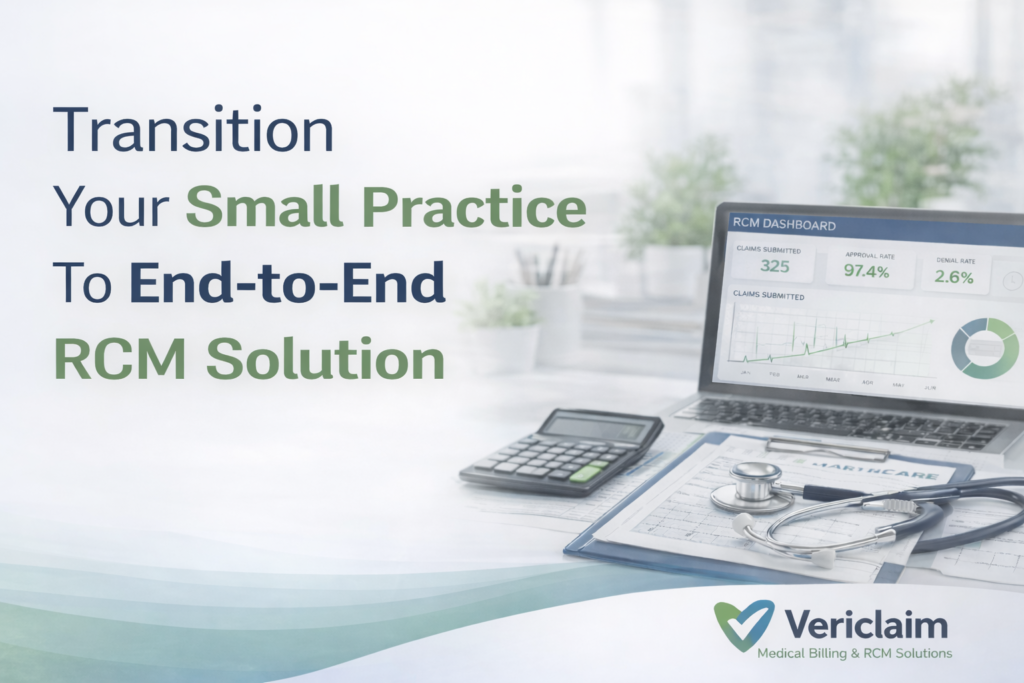
Running a small practice sounds simple on paper. In reality, it rarely feels that way. One minute you’re with a patient, the next you’re checking claims, fixing billing issues, or trying to understand why a payment is delayed again. It adds up.
At some point, most practice owners start thinking about a transition to an end-to-end RCM solution. Not because it sounds fancy, but because something has to change. When billing starts taking more energy than patient care, it’s a sign your system needs help.
The favourable news? This change doesn’t have to be overpowering. It can be gradual, practical, and a bit relieving once things fall into place.
Why Small Practices Struggle With Disconnected Systems
Let’s talk about what usually happens. Many small practices build their process step by step. A billing tool here, spreadsheets there, maybe a clearinghouse added later. It works for a while. Then things start slipping. Claims get delayed. Errors show up in places you didn’t expect. Staff spend more time fixing issues than preventing them. That’s where an end-to-end RCM solution changes the picture. Instead of separate pieces, everything connects. From patient intake to final payment, the flow becomes easier to follow.
You also start noticing small improvements that matter. Fewer rejected claims. Faster responses. Better visibility into what’s happening. That’s where revenue cycle optimization really starts to show its value, not in theory, but in everyday work.
Starting the Transition Without Overcomplicating It
Now, here’s where most people hesitate. The word “transition” sounds big. Everything seems to need to change at once. It isn’t. Start small by reviewing your current workflow and identifying where processes slow down. Sometimes it’s a claim submission. Sometimes it’s follow-ups. Sometimes it’s just unclear tracking. Once you spot those areas, the next step becomes clearer. You look for a system that fits your size and your pace, including support for Medical Credentialing & Payer Enrollment Services where needed. Not something overloaded, just something that supports medical billing automation in a way that actually helps your team.
Training is important as well, but it doesn’t have to be difficult. When the system makes sense, people adapt more quickly than you may anticipate. And yes, keep an eye on progress. Even small changes in billing accuracy improvement or turnaround time tell you you’re moving in the right direction.
What Changes Once Everything Connects
This is usually the part people don’t expect. The shift isn’t just technical, it’s practical. When your billing process runs smoothly, the entire day feels different. Staff isn’t constantly double-checking entries. Follow-ups don’t pile up the same way. Payments come in with fewer surprises. Patients notice it too. Clear billing reduces confusion, and that alone improves their experience.
On top of that, having access to insights helps more than most expect. You begin to see patterns. What works, what slows things down, and where adjustments help. That’s where claims processing efficiency becomes something real, not just a term.

Why Vericlaim Fits Small Practices
Here’s the part that really matters: who you work with. Because the system alone isn’t everything.
Vericlaim focuses on helping small practices move through this shift without adding pressure. Instead of forcing big changes overnight, they guide the process step by step. What stands out is how practical their approach feels. You’re not dealing with something overly complex. You’re working with a team that understands how small practices actually function.
With Vericlaim, you get support that covers setup, daily use, and ongoing adjustments. Their approach to RCM implementation tips isn’t theoretical; it’s based on real workflows and real challenges. That makes a difference.
Keeping Things Running Smoothly After the Shift
Once everything is in place, the goal is clear: keep it working without overthinking it. Check reports now and then. Not constantly, just enough to stay aware. Keep your team familiar with updates. Small refreshers go a long way. And don’t ignore communication. Staying connected with your RCM partner helps catch issues early. These habits support long-term practice efficiency strategies, even when the workload changes or grows.
A Simple Step That Changes More Than You Expect
Making a transition to an end-to-end RCM solution might feel like a technical decision at first. But in reality, it’s more about making daily work easier.
With Vericlaim, that shift feels manageable. You’re not trying to fix everything at once. You know, once you get the hang of it, something kind of surprising happens. You start spending more time with patients and less time fussing over invoices. Yes, it’s a relief, even if it doesn’t feel huge at first.
FAQs
1. What is an end-to-end RCM solution?
It manages the full billing cycle, helping reduce errors and improve billing accuracy over time.
2. Is it difficult to transition from a small practice setup?
Not really. When done step by step, even small practices can adapt without major disruption.
3. How quickly can results be seen?
Some improvements show within weeks, especially in tracking and payment flow.
4. Do I need to train my staff?
Yes, but most teams adjust quickly when systems support medical billing automation properly.
5. Can existing tools still be used?
In many cases, yes. Integration depends on the setup, but smooth transitions are common.
6. Why choose Vericlaim?
Vericlaim focuses on practical solutions tailored for small practices, not one-size-fits-all systems.
7. Does this improve long-term efficiency?
Yes, especially when paired with consistent practice efficiency strategies and monitoring.