

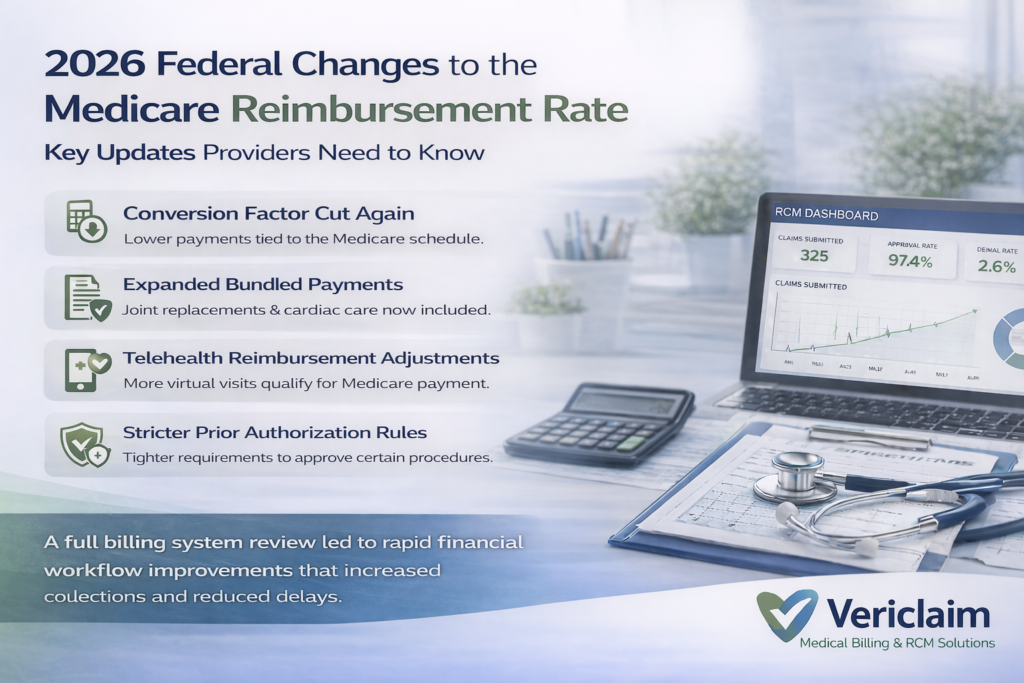
The 2026 Medicare fee schedule is cutting the conversion factor again. That change alone affects what physicians take home from every claim. The 2026 Medicare reimbursement changes also bring updates to telehealth billing, stricter prior authorizations, and revised procedure codes. Some practices are already seeing the impact. Miss one update, and claims start getting denied. Denials slow everything down. Vericlaim keeps track of these shifts, so your team doesn’t have to react at the last minute.
Key Updates Providers Need to Know
This year’s changes focus on how providers get paid and how care is delivered. On paper, a few updates may look minor. In reality, they rarely stay that way for long.
- Physician fee schedule updates adjust rates across services. Even a small shift becomes noticeable once claims begin processing.
- Bundled payments now include more procedures like joint replacements and cardiac care. This means teams must coordinate more closely. Otherwise, gaps show up fast.
- Telehealth reimbursements are expanding. It sounds straightforward, but it changes how visits are documented, coded, and billed.
- Preventive care incentives now offer better returns for screenings under federal Medicare revisions in 2026. This encourages earlier patient care rather than reactive treatment.
Sometimes the issue isn’t the update itself. It’s how small changes stack together. One adjustment affects another, and that’s where practices start feeling the pressure.
How Providers Will Experience the Changes
Providers will notice these updates during everyday operations, not just in reports.
- Revenue shifts may require slight cash flow adjustments. Planning early makes this easier to manage.
- Workflow changes mean staff need to get comfortable with updated coding and documentation rules. Without practice, errors happen quickly.
- Reporting accuracy matters more than ever. One incorrect code can delay a claim for weeks.
In many cases, practices don’t struggle because the rules are complex. They struggle because changes aren’t applied on time. By the time corrections happen, revenue has already been affected.
What Patients Can Expect
These changes don’t stay behind the scenes. Patients feel them too. Screenings are happening earlier. That alone helps catch conditions before they get serious. Telehealth is removing common barriers, so patients don’t delay care as often.
Wait times are also improving in many cases. Patients now expect faster service, not just hope for it. When billing systems run smoothly with Vericlaim, providers spend less time fixing issues and more time focusing on care. That shift is noticeable, even if patients don’t see the backend work.

Preparing Your Practice
Getting ready for 2026 doesn’t require major changes, but it does require consistency.
- Review updated fee schedules early
- Train staff on new coding and documentation rules
- Strengthen telehealth services where possible
- Monitor revenue patterns regularly
Managing only one area at a time can have an impact. It doesn’t have to be too much. Big problems later are avoided by taking small steps now.
How Vericlaim Supports Providers
Vericlaim helps practices stay aligned with these changes without adding extra workload. It saves staff time by updating billing systems with the most recent reimbursement rates. Additionally, it examines telehealth and preventative care claims to ensure that nothing is overlooked.
At the same time, Vericlaim supports teams with coding and compliance. That reduces the chances of costly mistakes. Instead of continuously resolving problems, employees may concentrate on maintaining consistency. That stability eventually has a significant impact on how well the practice operates.
Moving Forward with Confidence
The 2026 Medicare reimbursement changes may seem complicated at first. But most problems don’t come from complexity. They come from delays in response.
Practices that stay updated and adjust early usually avoid major issues. Those who wait often deal with denied claims and slower payments. It’s a pattern that repeats every year.
With Vericlaim, you don’t have to chase every update manually. Systems stay aligned, and your team stays focused. In the end, it’s not about reacting quickly. It’s about staying ready before problems even show up.
FAQs
1. How will Medicare payments change in 2026?
Rates adjust, telehealth expands, and preventive care incentives increase.
2. Will this affect my revenue?
Yes, even small changes can impact overall cash flow.
3. What changes for patients?
Better access to telehealth and more focus on early care.
4. How does Vericlaim help?
It manages billing, coding, and compliance to reduce errors.
5. Which services are most affected?
Primary care, specialist visits, and preventive services.
6. Is telehealth better covered now?
Yes, more virtual visits qualify for reimbursement.
7. How should providers prepare?
Update billing processes, train staff, and monitor revenue trends.