
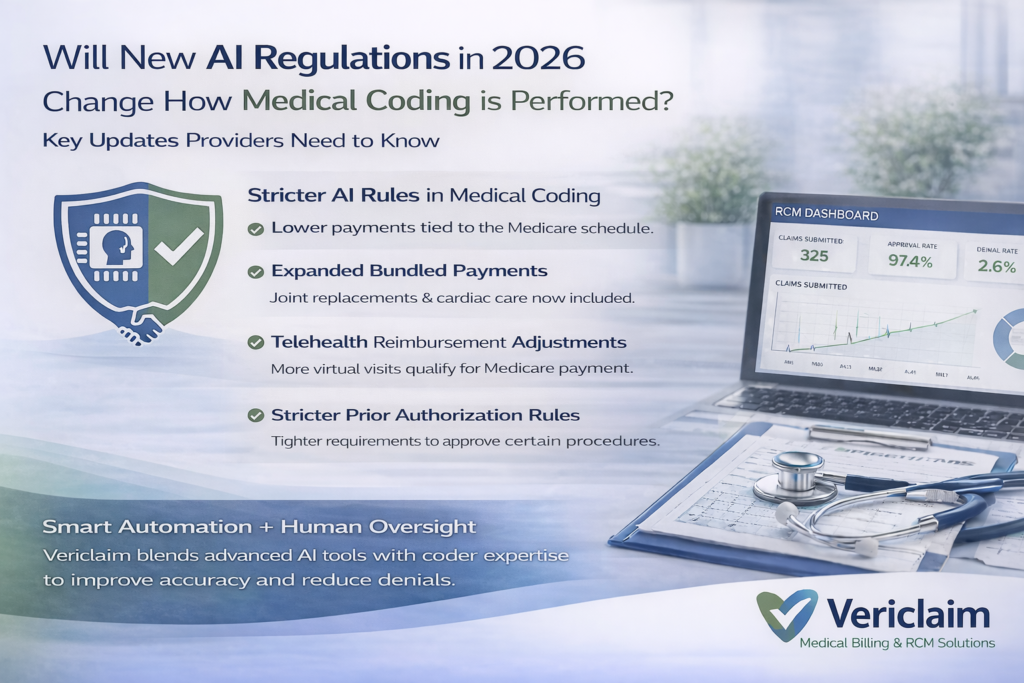
2026 is coming with some real changes for medical coding. The new AI Regulations in Medical coding aren’t just another rules update; they’re going to affect daily workflows in ways that might surprise teams at first. Machines will handle more of the repetitive tasks, but humans will still have to step in for tricky cases. That’s where precision and oversight really matter.
Some practices feel nervous about these shifts, but Vericlaim has helped many clinics adapt without stress. By blending smart automation with human review, coding becomes smoother, and claims get processed faster.
What the 2026 Rules Mean for Coding Teams
The new rules put a big focus on accountability. AI tools need to provide outputs that are fully traceable, auditable, and reliable. That doesn’t remove the human coder; it just changes what humans do. Instead of typing every code, they’re now checking exceptions and edge cases.
For example:
- Keeping logs of AI-assisted entries
- Comparing codes with payer rules
- Following risk adjustment coding standards
At first, it might feel like too much. But once teams adjust, daily workflows feel lighter. Less repetitive work, more time to handle unusual claims. And yes, Vericlaim helps make that transition feel natural, not forced.
AI As a Supportive Partner
Think of AI as an assistant rather than a replacement. It handles the boring, repetitive work while alerting humans when something doesn’t fit.
That improves clinical data processing without taking jobs away.
Some Benefits:
- Claims move faster
- Errors drop significantly
- Human focus shifts to complex entries
Coders often like this balance. Fewer tedious tasks, more meaningful work. Vericlaim ensures teams hit that balance without getting overwhelmed.
Getting Ahead of the Changes
Adjusting to AI-driven coding standards isn’t only about software. It touches training, documentation, and workflow practices. Teams that start early usually see better efficiency and fewer mistakes.
Practical Steps:
- Audit your current AI tools
- Update internal coding procedures
- Lean on Vericlaim for guidance
It’s amazing how much more efficiently things function when minor adjustments are made beforehand. Errors decline, staff stress reduces, and precision in coding and billing increases naturally.

Accuracy Benefits Under New Regulations
Here’s the interesting part: these stricter rules actually improve coding accuracy. Machines handle routine coding; humans focus on exceptions. That combination drastically reduces mistakes.
Benefits for Coders:
- Less time on repetitive entries
- More focus on complex claims
- Better audit readiness
With Vericlaim, this balance is achievable. AI efficiency plus human judgment ensures clean claims every time.
Tips for Smooth Adaptation
Integrating AI with human workflows takes some planning. A few tips:
- Train staff regularly
- Document coding decisions clearly
- Treat AI as an assistant, not a replacement
These straightforward changes maintain process fluidity and avoid bottlenecks.
Vericlaim guides practices step by step, so adoption is painless.
Looking ahead to 2026 and beyond
AI regulations in medical coding will be commonplace in 2026. Practices that adapt early will benefit from faster claims, fewer errors, and smoother operations. Choosing Vericlaim as a partner ensures teams stay confident and compliant.
Even minor updates now, checking AI outputs and reviewing coding rules, can save headaches later. Claims flow more easily, coding becomes precise, and staff focus shifts back to patient care. It’s a change, yes, but manageable with the right support.
FAQs
1. How will everyday workflows be impacted by AI restrictions in medical coding?
They improve medical billing and coding accuracy by enforcing tougher control, although human coders continue to validate AI results.
2. Are automated coding systems useful under new rules?
Yes. AI speeds up routine entries, while humans focus on complex claims.
3. How can Vericlaim help with AI regulation compliance?
Vericlaim offers guidance, staff training, and quality checks, keeping coding accurate and compliant.
4. How will everyday workflows be impacted by AI restrictions in medical coding?
They improve medical billing and coding accuracy by enforcing tougher control, although human coders continue to validate AI results.
5. Do coding errors decrease under these rules?
Yes. Clear protocols and human oversight improve coding error reduction.
6. Should internal coding guidelines be updated?
Absolutely. Following medical coding guidelines in 2026 keeps claims smoother and reduces errors.
7. How does AI impact risk adjustment coding?
AI now follows strict risk adjustment coding rules, improving compliance and accuracy.