

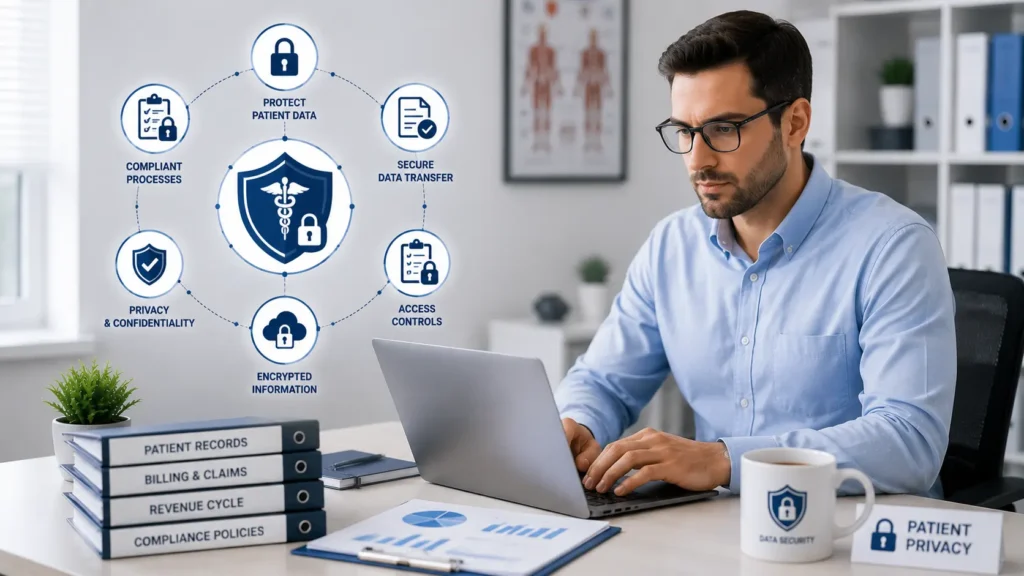
Healthcare organizations handle large volumes of sensitive patient information every day. From insurance details and treatment records to billing data and payment information, protecting this information is a critical responsibility. As healthcare operations become increasingly digital, maintaining HIPAA compliance has become essential for both regulatory protection and operational stability.
Medical billing and revenue cycle activities involve continuous access to protected health information. Billing teams, coders, credentialing specialists, and administrative staff all interact with patient data throughout the reimbursement process. Without proper safeguards, healthcare organizations may face compliance risks, financial penalties, and reputational damage. Maintaining strong privacy and security standards is, therefore, a fundamental component of effective healthcare operations.
How HIPAA Compliance Protects Revenue Cycle Processes
Every stage of revenue cycle management involves handling sensitive patient information. Activities such as medical billing, claims submission, payment posting, verification of benefits (VOB), and denial management all require secure access to healthcare data.
When patient information is improperly handled, healthcare organizations may face disruptions that extend beyond compliance concerns. Security incidents can delay workflows, interrupt reimbursement activities, and create additional administrative burdens.
Strong privacy and security controls help establish secure processes for accessing, storing, and sharing information throughout revenue cycle operations. These safeguards support operational continuity while helping protect patient privacy and sensitive healthcare data.
Reducing Risk Through Secure Information Management
Many compliance challenges originate from preventable operational issues rather than intentional misconduct. Unsecured file sharing, unauthorized system access, and inconsistent data handling procedures can all increase organizational risk.
Healthcare providers must ensure that employees understand how patient information should be managed during billing and reimbursement activities. This includes controlling who can access information and maintaining safeguards that protect sensitive records.
Organizations that prioritize HIPAA compliance often implement:
- Role-based system access
- Secure communication protocols
- Data protection procedures
- Employee compliance training
- Documentation controls
These measures help reduce vulnerabilities while supporting safer operational workflows.
Supporting Trust Between Patients and Providers
Patient trust is an important part of healthcare delivery. Individuals expect their personal and medical information to remain secure throughout the care process.
Billing activities often require the exchange of information between providers, insurance carriers, and administrative teams. Patients are more likely to feel confident in healthcare organizations that demonstrate responsible information management practices.
Strong HIPAA compliance helps reinforce that trust by establishing clear standards for handling protected health information. Beyond regulatory requirements, these practices contribute to a more professional and accountable healthcare environment.
Trust also plays a role in long-term patient retention and organizational reputation.

Why HIPAA Compliance Supports Billing Accuracy
Compliance and billing accuracy are closely connected. Inconsistent information management can create documentation issues that affect reimbursement workflows and claim quality.
For example, incomplete patient records, inaccurate data entry, or poor documentation controls can contribute to billing errors and claim delays. These issues may affect both compliance efforts and reimbursement performance.
Maintaining HIPAA compliance encourages organizations to establish structured documentation processes and stronger information governance practices. These controls support cleaner billing workflows while helping reduce administrative inconsistencies.
As a result, healthcare providers can improve operational efficiency while maintaining stronger data protection standards.
Creating a Culture of Accountability and Compliance
Compliance should not be viewed as a one-time requirement. Healthcare regulations, security risks, and operational processes continue to evolve over time.
Organizations that treat compliance as an ongoing responsibility are better positioned to adapt to changing requirements and maintain secure operations. Regular reviews, staff education, and process monitoring help strengthen accountability throughout the organization.
At VeriClaim Partners, compliance-focused workflows help support secure medical billing and reimbursement operations while maintaining alignment with industry standards.
In addition, structured compliance oversight contributes to stronger revenue cycle management by reducing operational risks that may affect financial performance.
Strengthening Long-Term Operational Security
Protecting patient information is essential for maintaining both regulatory compliance and operational stability. Healthcare organizations that fail to prioritize information security may expose themselves to unnecessary risks that affect patient trust, reimbursement activities, and business continuity.
By emphasizing HIPAA compliance, providers can strengthen data protection practices, support secure billing operations, improve documentation controls, and reduce compliance-related risks. At VeriClaim Partners, secure workflows and responsible information management help healthcare organizations maintain stronger operational foundations while supporting efficient reimbursement processes.
FAQs
What is HIPAA compliance?
HIPAA compliance refers to following federal requirements that protect patient health information and regulate how healthcare data is accessed, stored, and shared.
Why is HIPAA important in medical billing?
Medical billing involves sensitive patient information that must be protected throughout billing, reimbursement, and administrative processes.
Can HIPAA violations affect healthcare operations?
Yes. Violations may result in financial penalties, operational disruptions, reputational damage, and increased regulatory scrutiny.
How does HIPAA support revenue cycle activities?
Secure information management helps protect patient data while supporting billing, reimbursement, and documentation workflows.
How does VeriClaim Partners support compliance-focused operations?
VeriClaim Partners helps healthcare organizations maintain secure billing workflows, strengthen information management practices, and support operational compliance.