

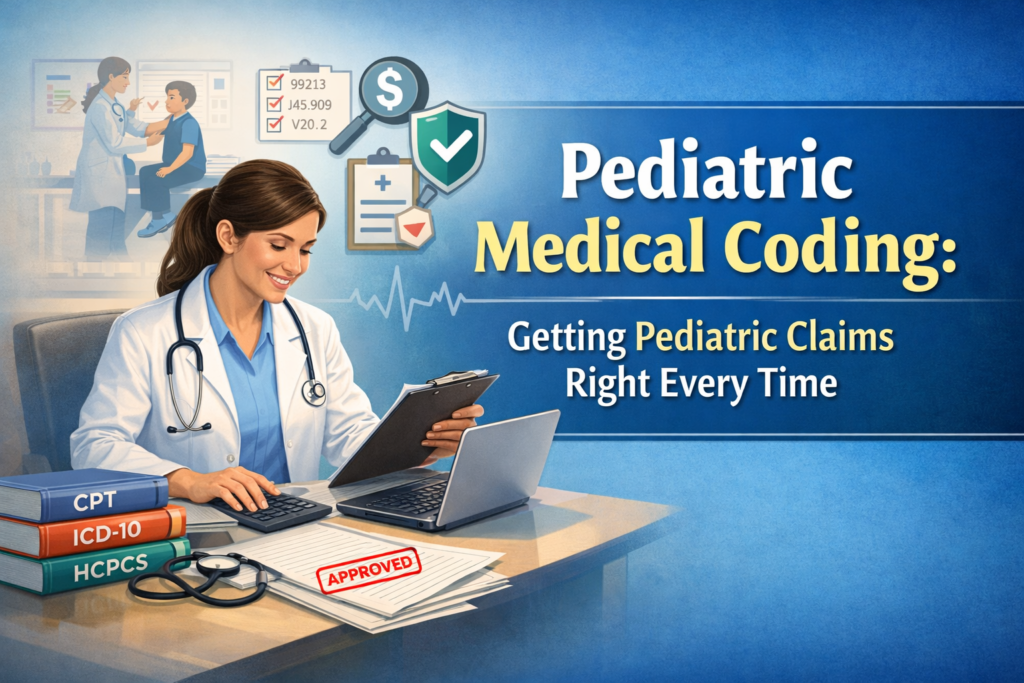
Running a pediatric clinic has a very specific pulse. It’s a fast-paced environment of quick check-ups, constant follow-ups, and a never-ending cycle of shots. Behind the scenes of all that clinical activity is pediatric medical coding. It’s the silent engine that either keeps your cash flowing or brings everything to a standstill. When your coding matches your notes and hits every payer rule perfectly, things work. When it doesn’t? The delays are instant. The goal is simple: total accuracy that supports the care you give without creating a significant billing challenge.
Why Accurate Coding Matters in Pediatric Practices
On paper, pediatric claims seem easy. In reality, insurance companies closely monitor. Whether it’s a routine physical or a complex sick visit, every single line item has to link back to your documentation. Pediatric medical coding ensures your services match what payers expect while keeping your practice safe from audits. Even a minor mistake can trigger a chain of denials, stalling your revenue when you least expect it.
What Is Pediatric Medical Coding?
Think of pediatric medical coding as a translation layer. It turns clinical work into the specific language of ICD-10 and CPT codes that insurers actually process. In pediatrics, a single visit often covers both preventive care and a separate health issue. Good coding separates these pieces correctly. This prevents you from losing money to bundling or getting stuck with underpayments for the work you actually performed.
How Evaluation and Management Codes Apply to Pediatrics
E/M coding is the centerpiece of pediatric billing. From newborn check-ups to established patient visits, every encounter relies on the complexity of your medical decision-making. Pediatric visits move fast, so staying disciplined with your notes is vital. Clear documentation is the only way to support your pediatric medical coding choices if a payer starts asking questions.
Preventive Visits and Well-Child Services
Preventive care is the backbone of any pediatric office. These appointments are packed with screenings and age-specific assessments. Accuracy here is non-negotiable. It’s very common for a well visit to turn into a sick visit halfway through. Robust pediatric medical coding allows you to report both services properly without triggering an automatic denial.
Diagnosis Coding in Pediatric Claims
Children aren’t just smaller adults, and their medical records shouldn’t look like they are. Your diagnosis choice has to paint a clear picture of the symptoms and findings found in your notes. Payers want high specificity, not overcoding. Consistent pediatric medical coding connects your diagnosis to the service provided, proving the medical necessity of every claim you submit.
Immunizations and Vaccine-Related Coding
Vaccine billing is a three-part puzzle: the administration, the product, and the counseling. Every piece has to line up with the chart. A simple mistake here can delay a whole payment or lead to avoidable partial denials. Reliable pediatric medical coding keeps these claims organized and makes them much easier to defend during an audit.
Documentation That Supports Clean Claims
Good documentation isn’t about writing more; it’s about writing clearly. Your notes should explain why a patient was seen, what you did, and how you arrived at your clinical decisions. When your documentation is solid, the pediatric medical coding process stays consistent across the board.
Reducing Errors That Lead to Denials
Most pediatric denials come from paperwork issues, a missing modifier, an incomplete note, or a service that looks like it was bundled incorrectly. Setting up internal checks and keeping your team trained can stop these leaks. A structured pediatric medical coding workflow is your best defense against rework and revenue dips.
Using Technology Without Losing Control
Software is a great tool, but it isn’t a replacement for actual expertise. A tool can flag a missing field, but a person has to make the final coding call. That is why many offices lean on trusted partners for medical coding; it lets them maintain high accuracy while the staff focuses on the kids.
Why Expertise Makes the Difference
Pediatrics is a specialty that demands close attention to detail. You need a team that understands payer behavior and the unique flow of a busy clinic. With the right support, pediatric medical coding stops being a headache and starts being a core strength of your practice.
Vericlaim Partners supports medical practices with compliant billing and coding processes built for long-term efficiency. When your pediatric workflows stay accurate, you spend less time fighting with insurance and more time focused on patient care. That’s the balance that actually matters.