
A clinic’s day can look fully booked and still face unexpected revenue gaps if insurance details are not verified correctly. One small mismatch in coverage can turn a confirmed appointment into a billing delay later. It feels minor at first, but it builds up quickly.
That is where Insurance Eligibility Verification becomes essential for smooth healthcare operations. It helps providers confirm coverage before treatment begins, reduce claim rejections, and maintain predictable reimbursement flow. Vericlaim supports clinics with structured verification processes designed to reduce errors and keep front-office operations more stable and efficient.
Why Verification Problems Disrupt Clinics
Most billing issues do not start during claim submission. They start much earlier, right at the patient intake stage. When insurance details are not confirmed properly, everything that follows becomes uncertain. And many clinics only notice the problem after a claim is denied.
Common Verification Gaps
Clinics often face issues such as:
- Outdated insurance information
- Inactive coverage at time of visit
- Missing eligibility confirmation
- Incorrect policy details
- Delayed payer response
These gaps slow down billing cycles and increase administrative pressure. Strong Insurance Eligibility Verification helps reduce these risks before patient care even begins.
How Insurance Eligibility Verification Improves Workflow
When verification is handled early and correctly, the entire billing process becomes more predictable. Staff members spend less time correcting errors and more time focusing on patient coordination.
Faster Confirmation Improves Daily Operations
Quick eligibility checks prevent confusion at the front desk and reduce billing disputes later.
Vericlaim supports clinics through structured patient insurance verification systems that help confirm coverage details before appointments. Their process also improves healthcare insurance validation, ensuring providers have accurate payer information from the beginning.
Daily operations feel more controlled when staff are not constantly fixing preventable insurance issues.
Better Accuracy Reduces Claim Rejections
Verification errors often lead directly to denied claims. A small mistake in policy numbers or coverage dates can interrupt reimbursement cycles.
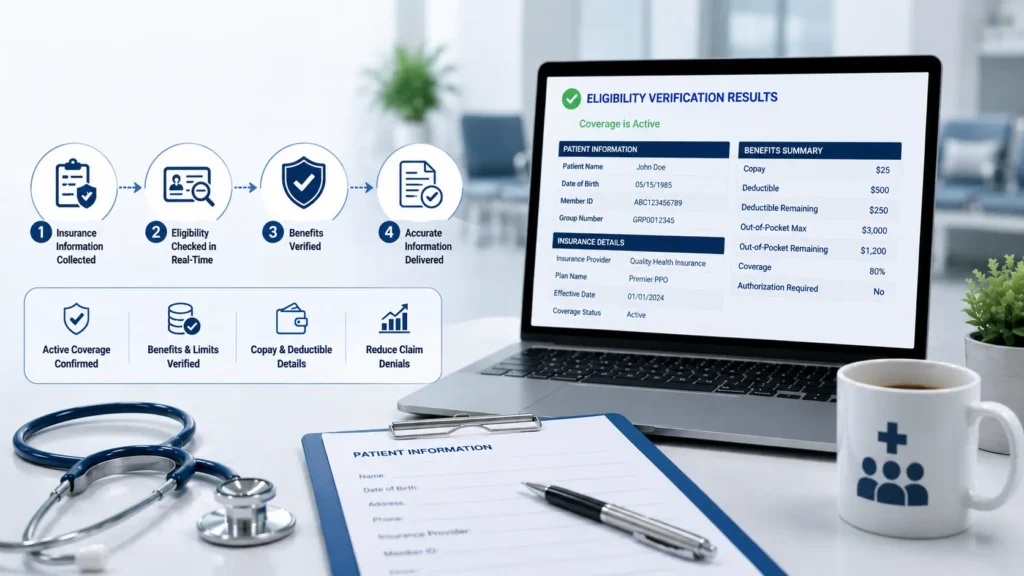
With proper systems in place, clinics can verify:
- Active coverage status
- Copay and deductible details
- Policy limitations
- Network participation
- Authorization requirements
This level of accuracy strengthens provider reimbursement verification and helps reduce financial uncertainty across the practice.
Why Early Verification Matters Most
Eligibility checks are not just administrative steps. They directly influence financial performance and patient experience.
Preventing Problems Before They Grow
When verification happens early, clinics avoid treating patients under incorrect assumptions about coverage.
Vericlaim helps healthcare organizations streamline eligibility and benefits checking so providers can make informed decisions before treatment begins. This reduces last-minute billing confusion and improves overall operational flow.
It also prevents uncomfortable conversations with patients when coverage issues are discovered too late.
In many clinics, even small delays in verification create a ripple effect that affects scheduling, billing, and follow-ups.

Improving Accuracy in Real Practice
Verification is not just about checking a box. It requires consistency, attention to detail, and reliable workflows that staff can follow every day.
Building a More Reliable Process
Clinics often improve results by:
- Verifying insurance before appointments
- Updating patient records regularly
- Confirming payer responses promptly
- Tracking authorization requirements early
These steps strengthen medical billing validation and reduce avoidable claim delays later in the cycle.
Over time, clinics notice fewer rejected claims and smoother reimbursement timelines when verification becomes a standard part of intake.
Building Confidence Through Better Systems
Healthcare teams already manage a heavy workload. Adding uncertainty around insurance only increases pressure on staff and affects patient flow.
Insurance Eligibility Verification helps clinics reduce that uncertainty and create a more stable billing environment. With support from Vericlaim, providers can improve accuracy, reduce claim issues, and maintain smoother communication between front-office and billing teams.
When verification is handled correctly, everything downstream becomes easier to manage.
A Smoother Start for Every Patient Journey
Reliable verification creates a stronger foundation for the entire care process. It reduces confusion, improves billing accuracy, and supports better financial planning for clinics.
Insurance Eligibility Verification is not just a background task; it is a critical step in maintaining operational stability. With Vericlaim, clinics gain structured support that helps them verify coverage confidently and reduce unnecessary disruptions in daily workflows.
Small improvements at the start often lead to much smoother outcomes later.
FAQs
1. What is Insurance Eligibility Verification?
Insurance Eligibility Verification is the process of confirming a patient’s insurance coverage, benefits, and policy details before providing medical services.
2. Why is eligibility verification important for clinics?
It helps reduce claim denials, prevent billing errors, and ensures providers know coverage details before treatment begins.
3. How does Vericlaim support verification processes?
Vericlaim helps clinics manage insurance verification, patient coverage checks, and structured billing support for smoother operations.
4. What happens if insurance is not verified?
Without verification, clinics may face denied claims, delayed payments, or unexpected patient billing issues.
5. Can verification improve reimbursement speed?
Yes. Accurate eligibility checks reduce errors, which helps claims move through the billing process more efficiently.
6. When should insurance verification be done?
Most clinics perform verification before the patient’s appointment to ensure accurate coverage details are available.
7. Does verification affect patient experience?
Yes. Clear coverage confirmation helps avoid confusion and creates a smoother financial experience for patients.