

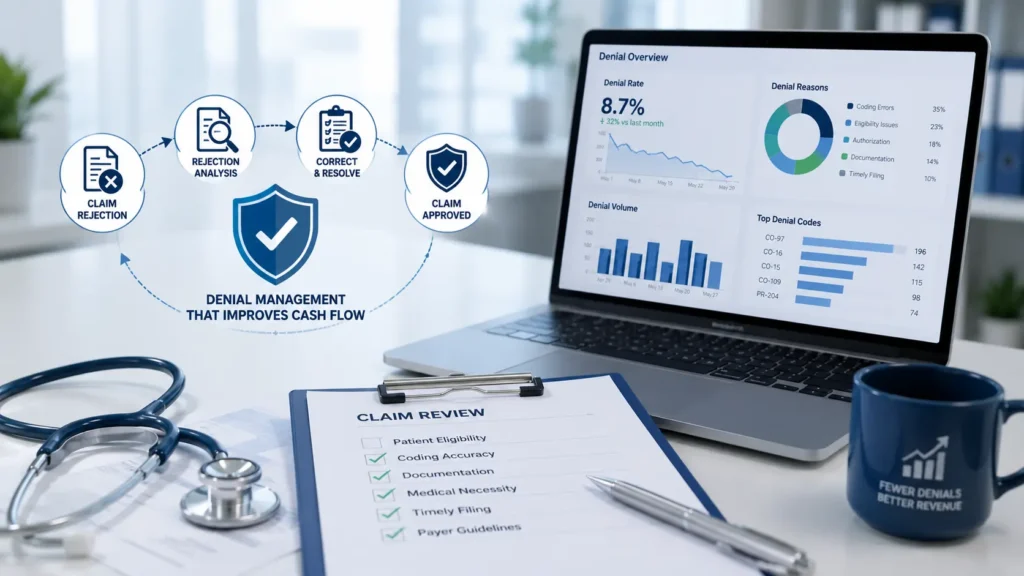
Denied insurance claims can slow down an entire healthcare practice. Payments get delayed, staff spend extra time fixing errors, and revenue becomes harder to predict. In many cases, the issue starts with small mistakes like missing documentation, coding inconsistencies, or eligibility problems. Because of that, many providers now rely on Denial Management Services to improve billing accuracy and reduce claim rejections before they affect cash flow.
Vericlaim supports healthcare organizations with practical billing solutions designed to reduce denials and improve reimbursement consistency. Instead of only correcting rejected claims, the focus stays on identifying recurring billing issues early and creating a smoother claims process over time.
Why Claims Get Rejected
Insurance claims rarely get denied for one single reason. Usually, several small billing issues combine and create reimbursement delays. At the same time, changing payer rules make the process even harder for internal teams to manage consistently.
Some common causes include:
- Incorrect medical coding
- Missing prior authorizations
- Incomplete patient details
- Eligibility verification errors
- Duplicate claim submissions
These issues often increase administrative pressure and slow down payments. As a result, healthcare providers spend more time fixing claims instead of focusing on patient operations. Stronger claim denial reduction strategies help practices identify these recurring problems earlier and improve billing performance.
How Denial Management Services Improve Revenue
A strong denial management process does more than recover rejected claims. It also helps providers prevent repeated billing errors before they interrupt reimbursements again. That proactive approach creates better financial stability across the revenue cycle.
With professional Denial Management Services, healthcare teams can review denial codes carefully, correct documentation mistakes faster, and submit cleaner claims moving forward. In many practices, even a small reduction in denials creates noticeable improvements in monthly cash flow.
What Effective Denial Support Includes
- Claim error analysis
- Timely claim corrections
- Faster resubmissions
- Payer compliance reviews
- Ongoing denial tracking
This process also improves medical claims processing because billing teams can identify operational gaps before rejected claims begin to pile up.
Better Billing Workflow Support
Reliable billing support and denial management should work together. When communication gaps exist between billing and follow-up teams, repeated errors become difficult to control. Meanwhile, unresolved denials continue affecting reimbursement timelines.
Vericlaim provides connected medical billing services that support claim accuracy from the beginning of the submission process. Claims receive careful review, payer requirements are monitored, and denied submissions get consistent follow-up support.

Why Better Visibility Matters
Healthcare providers often benefit from:
- Reduced claim aging
- Better reimbursement tracking
- Faster issue identification
- Improved payment consistency
- More organized billing workflows
In daily operations, Denial Management Services help practices stay proactive instead of constantly reacting to denied claims weeks later.
Why Healthcare Providers Choose Vericlaim
Healthcare billing requires accuracy, industry knowledge, and careful attention to payer requirements. Even experienced internal teams can struggle when denial volumes increase unexpectedly. That is why many providers look for outside billing support that improves workflow consistency without disrupting operations.
Vericlaim approaches denial management with detailed claim reviews and practical reimbursement support. Their team focuses on identifying recurring billing issues while helping healthcare organizations improve submission accuracy over time.
Key Benefits Providers Notice
- Fewer repeated claim denials
- Improved reimbursement visibility
- Lower administrative workload
- Better follow-up organization
- More stable billing operations
Additionally, providers benefit from stronger revenue cycle management processes that support healthier financial performance and long-term operational stability.
Build A Stronger Revenue Process
Reducing denied claims starts with improving billing accuracy before problems grow larger. Cleaner submissions, organized follow-ups, and consistent claim reviews all contribute to better reimbursement outcomes. With professional Denial Management Services, healthcare providers can reduce operational stress while creating a more dependable billing process.
Vericlaim helps healthcare organizations improve claim management, reduce denial-related disruptions, and maintain stronger reimbursement consistency through practical billing support. Choosing experienced denial management support today can help create healthier financial performance tomorrow.
FAQs
1. What are Denial Management Services?
Denial management services help healthcare providers identify, correct, and resubmit denied insurance claims to improve reimbursements and reduce revenue loss.
2. Why do healthcare claims get denied?
Claims often get denied because of coding mistakes, missing documentation, authorization problems, or eligibility verification errors.
3. How do denial management services improve cash flow?
They help providers recover payments faster, reduce repeated denials, and improve overall claim submission accuracy.
4. Does Vericlaim help manage denied claims?
Yes. Vericlaim supports healthcare providers with denial tracking, claim corrections, and billing workflow support designed to improve reimbursements.
5. Can denial management reduce administrative pressure?
Yes. Organized denial handling helps billing teams spend less time correcting recurring claim issues manually.
6. Are denial management services useful for small practices?
Absolutely. Smaller healthcare practices often benefit from additional billing support because internal resources may remain limited.
7. How quickly can providers notice improvements?
Many providers notice better claim tracking and fewer repeated denials within the first few billing cycles after improving their denial management process.