

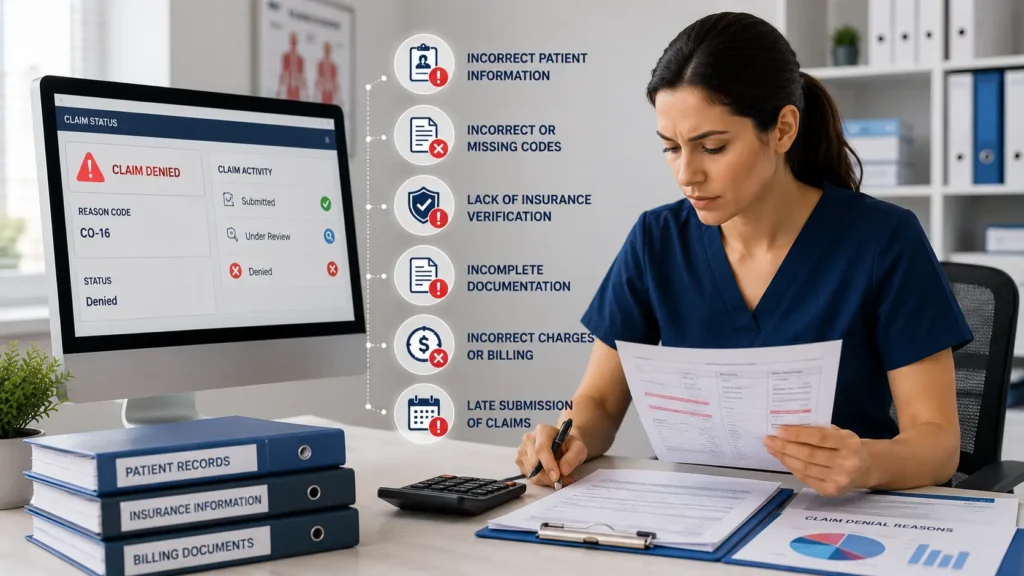
Timely reimbursements are essential for maintaining healthy financial operations in any healthcare practice. However, many payment delays are not caused by insurance carriers alone. In many cases, reimbursement issues originate from preventable administrative mistakes made during the billing process. Even small inaccuracies can interrupt claim processing, increase administrative workload, and slow revenue collection. Understanding the most common medical billing errors can help healthcare organizations strengthen billing performance and reduce avoidable delays.
From registration mistakes to documentation gaps, billing inaccuracies affect every stage of revenue cycle management. While individual errors may seem minor, recurring issues often create significant financial disruption over time. Identifying these challenges early allows providers to improve reimbursement efficiency and maintain stronger financial control.
How Medical Billing Errors Disrupt Reimbursement Timelines
Insurance claims move through multiple review stages before payment is issued. Payers evaluate patient information, coverage details, coding accuracy, and supporting documentation before approving reimbursement.
When claims contain mistakes, they may be rejected, denied, or placed into manual review queues. These interruptions extend payment timelines and require additional staff effort to resolve.
Many healthcare practices focus on denied claims but overlook the impact of delayed claims. A claim that requires repeated corrections can remain unpaid for weeks, affecting cash flow and increasing administrative costs.
Incorrect Patient Information
One of the most common medical billing errors occurs during patient registration. Inaccurate demographic information, policy numbers, or insurance details can prevent claims from processing correctly.
A simple spelling mistake or outdated insurance record may cause a payer to reject a claim before reimbursement review even begins. These issues often require claim resubmission and additional verification efforts.
Common registration mistakes include:
- Incorrect member identification numbers
- Misspelled patient names
- Outdated insurance information
- Missing subscriber details
- Incorrect date of birth records
Accurate front-end data collection helps reduce these preventable reimbursement delays.
Documentation Gaps and Incomplete Records
Insurance carriers rely on clinical documentation to verify that billed services were provided and medically supported. When documentation is incomplete, reimbursement delays often follow.
Missing treatment details, unsigned records, or incomplete physician notes can trigger requests for additional information. Even when services are appropriate, insufficient documentation may prevent timely payment.
Reducing medical billing errors requires close alignment between clinical records and billing workflows. Consistent documentation practices help support cleaner claims and reduce reimbursement interruptions.
This issue becomes particularly important when practices manage high patient volumes and complex treatment plans.
Coding and Modifier Mistakes
Accurate coding plays a critical role in claim processing. Errors involving diagnosis codes, procedure codes, or billing modifiers frequently create reimbursement delays.
A claim may be delayed if:
- Diagnosis codes do not support the service billed
- Required modifiers are missing
- Procedure codes are outdated
- Coding lacks sufficient specificity
Many recurring billing issues originate from coding inconsistencies rather than payer decisions. Regular coding reviews help identify these issues before claims are submitted.
Strong medical coding practices improve claim quality and reduce the likelihood of avoidable reimbursement disruptions.

Failure to Address Payer Requirements
Insurance carriers often maintain unique billing requirements that differ across plans and specialties. Claims that fail to meet these requirements may be delayed even when coding and documentation are accurate.
Examples include:
- Missing prior authorizations
- Referral requirements
- Coverage limitations
- Claim formatting requirements
Healthcare providers who overlook these details frequently encounter medical billing errors that slow reimbursement cycles.
Effective billing workflows include verification processes that confirm payer-specific requirements before claim submission. This proactive approach helps reduce administrative rework and improve claim efficiency.
Improving Accuracy Through Better Billing Oversight
Preventing reimbursement delays requires more than correcting claims after problems occur. The most effective approach is identifying recurring issues before they affect payment performance.
Reporting and workflow analysis can reveal patterns that contribute to medical billing errors across the organization. Tracking rejection trends, documentation issues, and payer responses helps healthcare providers implement meaningful process improvements.
At VeriClaim Partners, billing oversight focuses on identifying workflow gaps that may affect reimbursement efficiency. By addressing root causes rather than isolated mistakes, providers can improve claim quality and reduce administrative burdens.
Creating More Reliable Reimbursement Processes
Delayed payments often result from a combination of small issues occurring throughout the billing process. Incorrect patient information, documentation deficiencies, coding inconsistencies, and overlooked payer requirements can all slow reimbursement timelines.
Reducing medical billing errors helps healthcare organizations strengthen claims submission, improve reimbursement consistency, and support healthier financial performance. Through stronger process controls, workflow visibility, and billing accuracy, VeriClaim Partners helps providers create more reliable reimbursement operations and reduce avoidable payment delays.
FAQs
What are the most common medical billing errors?
Common errors include incorrect patient information, documentation gaps, coding mistakes, missing modifiers, and overlooked payer requirements.
How do billing mistakes affect reimbursements?
Billing errors can cause claim rejections, denials, manual reviews, and payment delays that slow revenue collection.
Why is documentation important in claim processing?
Complete documentation helps insurance carriers verify medical necessity and supports accurate reimbursement decisions.
Can coding errors delay insurance payments?
Yes. Incorrect diagnosis codes, procedure codes, or modifiers frequently result in reimbursement delays and claim corrections.
How does VeriClaim Partners help reduce billing issues?
VeriClaim Partners helps healthcare providers improve billing accuracy, identify workflow gaps, and strengthen reimbursement processes through structured billing oversight.